


Magnesium is the fourth most abundant element in the human body. An adult body contains approximately 25g magnesium, with 50% to 60% in the bones and most of the rest in soft tissues. Less than 1% of total magnesium is in blood serum, and these levels are kept under tight control. Normal serum magnesium concentrations range between 0.75 and 0.95 (mmol)/L. Hypomagnesemia is defined as a serum magnesium level less than 0.75 mmol/L. Magnesium homeostasis is largely controlled by the kidneys, through urine. Urinary excretion is reduced when magnesium status is low.
Magnesium deficiency is not uncommon among the general population. Although kidneys limit urinary excretion to avoid hypomagnesemia, habitual low intakes of magnesium or excessive losses, due to different causes and conditions (alcohol consumption, diarrhea, kidney problems, digestive problems), can lead to a magnesium subclinical deficiency. Early signs of magnesium deficiency include weakness, loss of appetite, fatigue, nausea, and vomiting. Afterwards, muscle contractions and cramps, numbness, tingling, mood changes, abnormal heart rhythms.
Signs and symptoms of Magnesium Deficiency
Physical Symptoms Psychological symptoms
Muscle spasms and tightness Insomnia
Muscle weakness Low mood
Tremors Anxiety
Menstrual cramps Irritability
Constipation
Headaches
Fatigue
Palpitations
Loss of appetite
Chronic magnesium deficiency may increase the risk for a number of more serious conditions, medical like type 2 diabetes, PMS, abnormal heart rate, high blood pressure, migraine headaches, osteoporosis or psychiatric like depressive disorders.
What causes Magnesium Deficiency?
Modern-day life makes it difficult to get enough of this mineral, and that is through three main factors:
- Depleted food: Magnesium in our food sources has dramatically decreased over the last 70-100 years.Modern farming processes have depleted minerals from the soil. Some food processing techniques can also strip away up to 80% of the magnesium levels in grains.
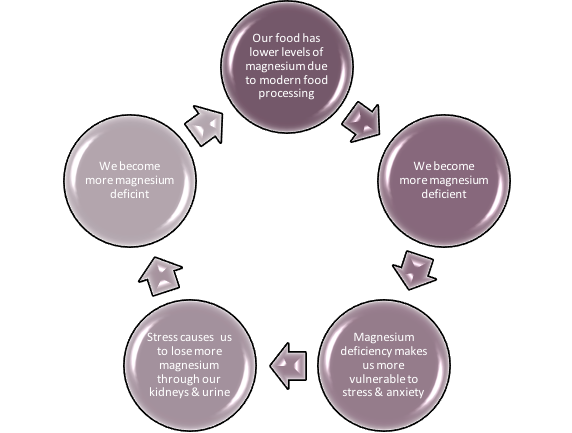
- Stress: Stress causes us to lose more magnesium through the kidney and urinary excretion. Long periods of stress can result in significant magnesium depletion.
- Certain drugs: Medications, drugs, and substances can make some people at higher risk for magnesium deficiency. This includes people who consume alcohol or caffeine or those who take diuretics, proton pump inhibitors (ex. Zantac, Prevacid), antacids, high-dose calcium supplements, and some antibiotics.
Some chronic gastrointestinal conditions (ex. celiac disease, Crohn’s disease, chronic diarrhea) can also impact the absorption of minerals and contribute to magnesium deficiency.
People with type 2 diabetes could be at risk of magnesium deficiency. Although it still remains unclear if magnesium deficiency represents a cause or a consequences of this pathology.
Older people absorb less magnesium from the gut and lose more magnesium because of an increased renal excretion. Chronic magnesium deficiency is indeed common in the elderly, usually due to a decrease both in diet assumption and intestinal absorption, and it is probably exacerbated by estrogen deficit, which occurs in aging women and men and cause hypermagnesuria.
Athletes are another group of people that risk inadequate magnesium intake and are prone to deficiency. Athletes are recommended to consume higher amounts of potassium and magnesium. Usually, renal elimination involves approximately 100 mg/d, whereas the losses via sweat are generally low. However, during intense exercise, these losses can increase considerably. Moreover, since magnesium activates the enzymes involved in protein synthesis, it is involved in ATP metabolism and magnesium serum levels decrease with exercise.
The vicious cycle of Magnesium Deficiency and Stress
Magnesium is involved, as a cofactor for over 600 enzymes or as an activator, in practically every major metabolic and biochemical process within the cell and is responsible for numerous functions in the body, including bone development, neuromuscular function, signaling pathways, blood pressure regulation, energy storage and transfer, glucose, lipid and protein metabolism, DNA and RNA stability, and cell proliferation.
Magnesium helps your body and brain by:
- Working with calcium to strengthen your bones
- Playing a role in brain function, which regulates anxiety, mood and depression
- Decreasing the incidence of migraines
- Increasing your body’s efficiency in breaking down sugars / adequate carbohydrate metabolism
- Balancing hormones that regulate circadian rhythm and the ability to sleep better
- Improving digestion
- Regulating pathways of anti-inflammation system
- Influencing cardiovascular system
Assessing magnesium status is difficult because most magnesium is inside cells or in bone. The most commonly used method for assessing magnesium status is measurement of serum magnesium concentration, even though serum levels have little correlation with total body magnesium levels or concentrations in specific tissues. Other methods for assessing magnesium status include measuring magnesium concentrations in RBC and urine or conducting a magnesium-loading (or tolerance) test. No single method is considered satisfactory. To comprehensively evaluate magnesium status, both laboratory tests and a clinical assessment might be required.
How much Magnesium do we need?
Recommended Intakes
Recommended Dietary Allowances (RDAs) for magnesium
| Age | Male | Female | Pregnancy | Lactation |
| Birth to 6 m | 30mg* | 30mg* | ||
| 7-12 months | 75mg* | 75mg* | ||
| 1-3 y | 80mg | 80mg | ||
| 4-8 y | 130mg | 130mg | ||
| 9-13 y | 240mg | 240mg | ||
| 14-18 y | 410mg | 360mg | 400mg | 360mg |
| 19-30 y | 400mg | 310mg | 350mg | 310mg |
| 31-50 y | 420mg | 320mg | 360mg | 320mg |
| 51+ years | 420mg | 320mg |
*Adequate Intake (AI)
Sources of Magnesium
Magnesium is considered widely distributed in foods, although the amount of magnesium contained in food is influenced by various factors including the soil and water used to irrigate, fertilizers, conservation, and also refining, processing, and cooking methods.
In general, green leafy vegetables, such as spinach, seeds, legumes, nuts (almonds, cashews, Brazil nuts, and peanuts), whole grain breads, and cereals (brown rice, millet), some fruits, and cocoa are considered good sources of magnesium.
Tap, mineral, and bottled waters can also be sources of magnesium, but the amount of magnesium in water varies by source and brand (ranging from 1 mg/L to more than 120 mg/L)
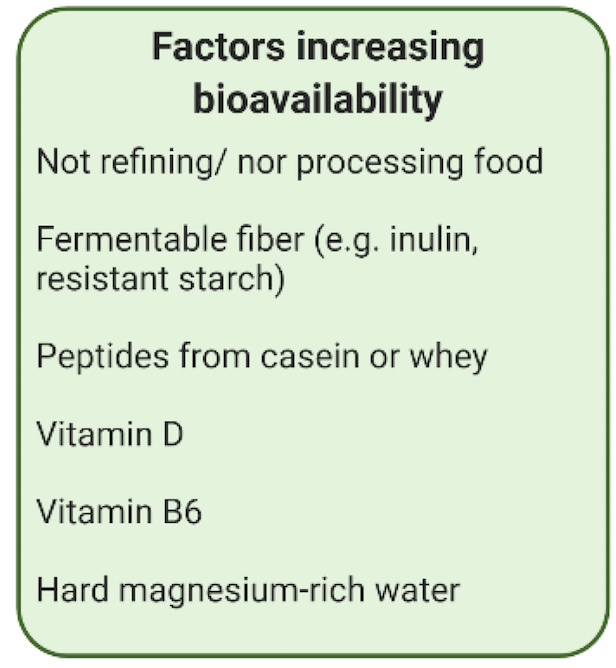
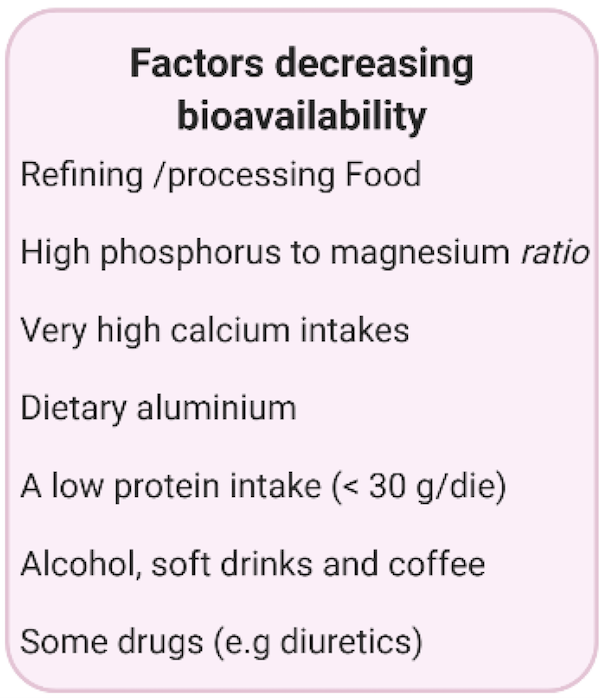
Approximately 300mg are ingested daily in the diet, however there are several factors that hinder or facilitate magnesium availability. Approximately 30% to 40% of dietary magnesium consumption is usually absorbed by the body.
Variables that can facilitate or obstruct Magnesium Absorption
Dietary Supplements of Magnesium
Magnesium supplements come in many different forms and bioavailability (citrate, malate, taurate, oxide, chloride, sulfate, glycinate, threonate). Choosing the right form of magnesium matters and depends on many individualized factors, including your symptoms. Magnesium absorption from different kinds of supplements is not the same.
Glycinate: improved sleep, muscle relaxation, PMS relief
Malate: energy production, chronic pain
Citrate: constipation relief
Oxide: severe constipation, very short term use
Taurate: blood sugar balance and cardiovascular health
Sulfate: detox, relaxation, sore muscles
L-threonate: improves brain function and memory
Although an excess of magnesium from food does not represent a health risk in healthy individuals, high doses of magnesium from dietary supplements, drugs, or other sources can often cause diarrhea accompanied by nausea and abdominal cramping.
While a healthy diet should be the starting point to raising magnesium levels, it can be difficult to get enough from food because of the reasons mentioned above. Supplementation in some cases considered to be essential and deserve more attention in healthcare. Getting enough magnesium can help relieve troubling symptoms and protect us from more serious chronic illnesses. Magnesium is foundational to good health.